Multiplex Wins Main Works Contract for Queen’s Wharf

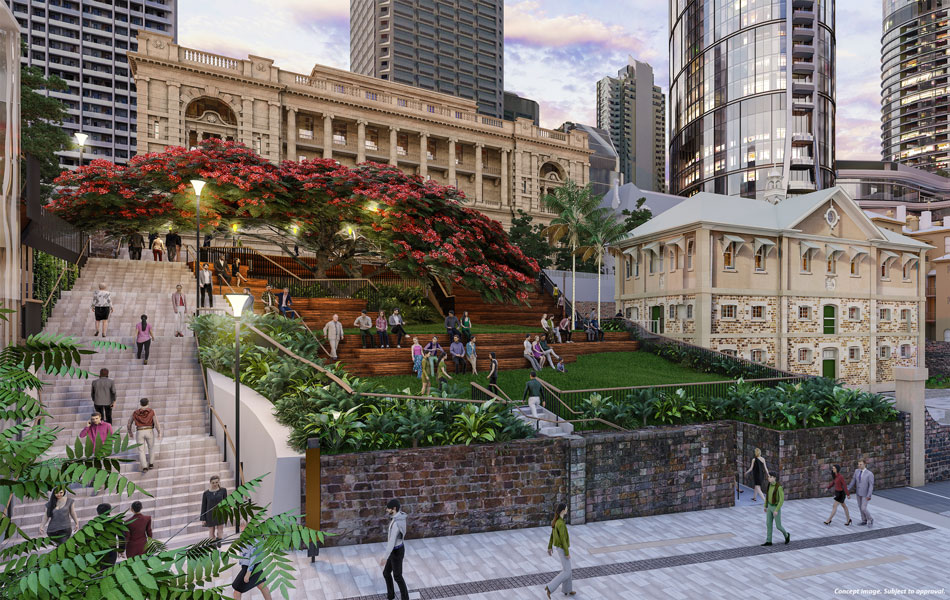
Queen’s Wharf Brisbane will transform the CBD with four new luxury hotels, more than 50 new bars and restaurants, 2,000 residential apartments and the equivalent of 12 football fields of public space when the $3.6 billion development is complete.

Destination Brisbane Consortium has awarded preferred contractor status to Multiplex for the major construction works at the Queen’s Wharf Brisbane Integrated Resort Development.

The appointment follows a comprehensive tender process and represents a significant milestone in the delivery of the overall project where $3.6 billion will be invested into the CBD site. The works contracted are in line with the overall project budget.

Destination Brisbane Consortium Project Director Simon Crooks said the contract still required finalisation and remained subject to DBC board approval and State Government endorsement and includes the integrated resort development shell and core and the iconic Sky Deck – with initial works to start within months.


“The works that Multiplex will deliver include the shell and core works covering the basement, base services, tower structures and the facade of the main integrated resort,” Mr Crooks said.

“It includes the integrated resort high-rise tower shells ready for later fit-out works, the podium level nestled between the towers and the iconic Sky Deck that will sit 100 metres above street level.

Works will commence mid-2019 with construction works expected to reach George Street level in late-2020 and the first stage of the IRD ready for completion in late-2022.

In addition to the integrated resort development construction activities, maritime work has now commenced in the Brisbane River for construction of the piled suspended concrete slab that will eventually provide 6,500m2 of new public space.  These works are being undertaken by Probuild.

For construction, employment or supply opportunities please contact;

Probuild direct on 1800 676 329 or email: queenswharf@probuild.com.au

Multiplex direct on 1800 931 760 or email queenswharfbrisbane@multiplex.global

Cross River Rail

The Queensland Government has announced the companies that will build the transformational $5.4 billion Cross River Rail Project.

The 10.2-kilometre rail line will run from Dutton Park to Bowen Hills, with a 5.9-kilometre twin tunnel under the Brisbane River and CBD, four new underground stations and upgrades to existing stations. Following a comprehensive evaluation process, the project’s major works packages will be delivered by the following consortia:

  • PULSE – the Tunnel, Stations and Development (TSD) public private partnership

The PULSE consortium is led by CIMIC Group companies, Pacific Partnerships, CPB Contractors, and UGL with international partners DIF, BAM and Ghella.

  • UNITY – the Rail, Integration and Systems (RIS) alliance

UNITY Alliance brings together CPB Contractors, UGL, AECOM and Jacobs, and partners HASSELL, RCS Australia, Acmena, Martinus Rail and Wired Overhead Solutions.

  • Hitachi Rail STS – the European Train Control System (ETCS).

The European Train Control System (ETCS) will be delivered by Hitachi Rail STS.

Minister for Transport and Main Roads Mark Bailey said Cross River Rail would be ready to service the South-East by 2024.

The Queensland Government has also recognised ACMA member, PDC for their delivery of major project Building Information Modelling (BIM) / Digital Engineering implementation.

Digital Network Approach (DNA) has been initiated by the Cross River Rail Delivery Authority (CRRDA) to develop a common digital project environment. To undertake this, the CRRDA have engaged PDC to implement the DNA. The PDC BIM team lead a consortium of client side consultants to deliver the Digital Engineering strategy and implementation, that includes the disciplines of spatial database implementation (Meta Moto) and gamification of the projects model (V2i).

PDC and their partners are extremely proud to work alongside the CRRDA and to be referenced in the Queensland Government’s Policy – Digital Enablement for Queensland Infrastructure – Principles for BIM Implementation.

“Our leading approach to the digital design and delivery of Queensland’s public infrastructure is front and centre, particularly for our number one infrastructure project – Cross River Rail,” Cameron Dick, minister for State Development, Manufacturing, Infrastructure and Planning, detailed about how eager the government are to improve the way infrastructures projects should be designed and constructed.

Terry Rossitto, chair of the Infrastructure Association of Queensland (IAQ), also explained that the release of the BIM principles policy gives the industry confidence to invest in education and training opportunities.

“An example of this is the good work progressed by the Cross River Rail Delivery Authority in developing a digital model illustrating the value these practices can bring to major infrastructure project delivery,” he said said.

For more information on this major project you can go to https://crossriverrail.qld.gov.au/

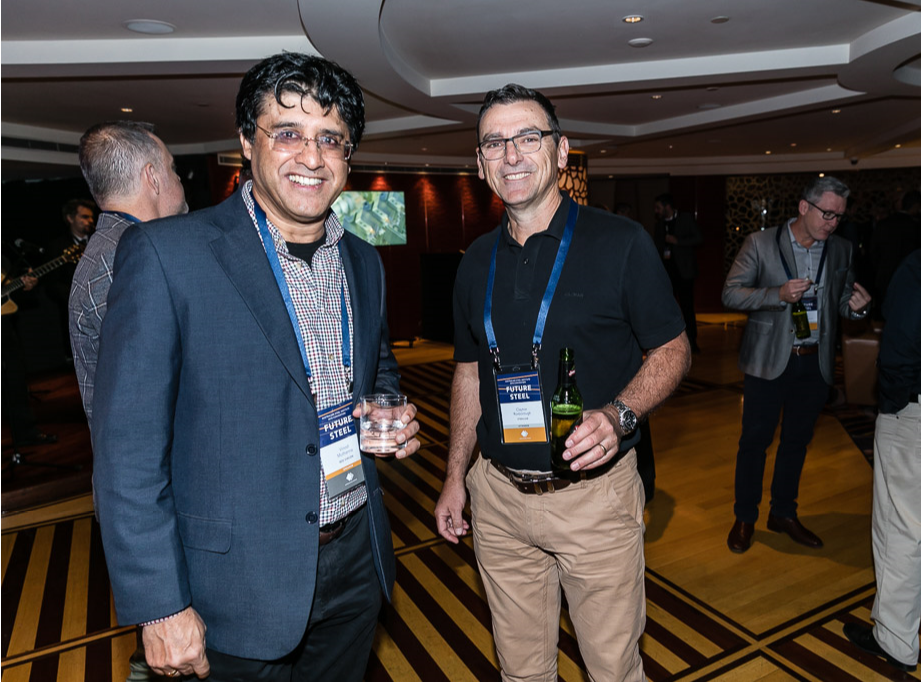
Australian Steel Convention 2019

BEYOND THE PIPELINE
15 – 17 September 2019
The Westin Sydney

Many questions are being asked of Australia’s steel industry. What does our future look like? Do we have the capability & capacity to deliver on the nation’s needs? Can Australian steel remain a world leader, adapting in the fast-changing industrial landscape?

The reality is, Australia’s steel future has never looked brighter. Through continual evolution, we’re building on our proud history of delivering high-quality infrastructure and projects that stand the test of time. Our workforce is rapidly expanding its skills and abilities to meet new challenges while reimagining and reshaping steel’s potential.

The Australian Steel Institute’s 2019 Convention looks at current infrastructure opportunities and beyond the project pipeline, focussing on forging deeper and more meaningful commercial links that will see our industry continue to grow and thrive.

Convention sessions will examine:

  • Achieving on-shore production growth goals
  • The increasing size and scope of infrastructure demand
  • Why we can confidently invest in steel’s future
  • Understanding the different viewpoints, capabilities and challenges facing industry stakeholders
  • Global investment trends
  • Delivering quality and mitigating risk
  • Supply chain transparency and integrity
  • Emerging market opportunities

The Australian Steel Convention is the industry’s premier event. Bringing together:

  • Australian manufacturers, distributors, fabricators, roll-formers
  • Australian design and structural engineers
  • Detailer/modellers and constructors
  • Key supply chain partners and suppliers
  • Key decision-makers and influencers in local infrastructure projects
  • Federal and State Government policy and decision makers

For the opportunity to see beyond the pipeline and stay ahead of the game, the Australian Steel Convention is the 2019 event not to be missed.

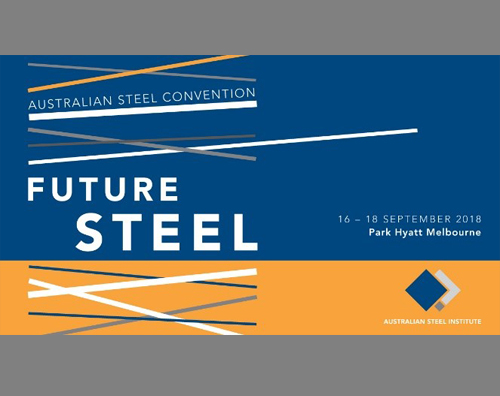
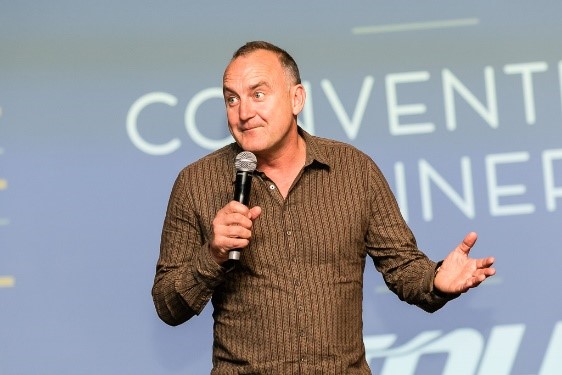
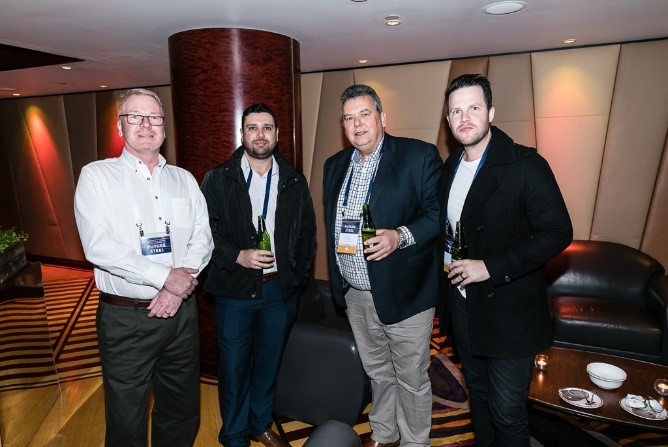
2018 Australian Steel Convention – Park Hyatt Hotel, Melbourne


National Forum highlights

Present:

Chris Anderson Revision – Zero
Brad Backer BDS Vircon
Shaun Brown Haywards
Steve Cox Demcox
David Dawson PDC
Rick Dembiany Demcox
John Gardner ASI (Minutes Secretary)
Peter Lawrence van der Meer Consulting
John Lyons PDC
Jason Nankivell PDC
Russell Neal Revision – Zero
Scott Peeler Building Point
Tim Rachow BDS Vircon
Clayton Roxborough Steelcad
Phil Shanks Steelcad
Dardo Uteda Steelforce
Chris Velovski EDC Consultants
  1. Introduction and welcome
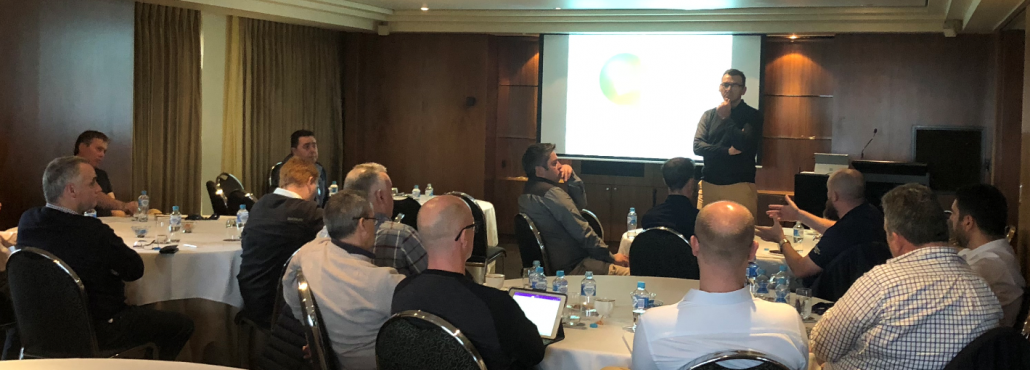
  • Clayton Roxborough (ACMA Chair), welcomed the delegates and reviewed key achievements and activities of the AISD in Queensland prior to the formation of ACMA. These included member tours of steel industry facilities such as galvanizers, Webforge, Monowills, construction sites etc, providing assistance to the Galvanizers Association of Australia (GAA) to produce venting & draining wall charts, steel detailer qualification framework and Integrated Project Delivery (IPD) Awards.
  1. Agenda Discussion Topics

AISD National Amalgamation

  • The AISD has been dissolved and ACMA has been formed as a not for profit company limited by guarantee. ACMA a corporation and has a Board of Directors.
  • It was agreed that the ACMA AGM will be held at future ASI Steel Conventions.
  • It is planned that the new ACMA website will allow ACMA members to share information online.
  • Membership certificates will be provided to all ACMA financial members.


Review of Steel Detailers Handbook

  • ACMA Secretary, Phil Shanks has been leading the revision of the Australian Steel Detailers Handbook and work is progressing well. He advised that information on cold-formed steel sections including purlins and girts will need to be included in the new edition of the Handbook. The ASI and ACMA logos will be included on the drawings provided as part of the Handbook.   It was agreed that ASI would produce the final table of contents for the Handbook.   The revision of the Handbook is scheduled to be completed by the end of 2019.


Integrated Project Delivery (IPD)

  • BIM in New Zealand (BIMinNZ) at https://www.biminnz.co.nz/ is also active in promoting early engagement by the project supply chain.
  • ACMA “IPD rules of engagement “are needed to guide participants in the IPD process and set boundaries.
  • An ACMA web-based portal could be set up in order to share IPD news and activities between ACMA members.
  • Next month Phil Shanks will be presenting an IPD case study on a steel walkway project being built in the Katharine Gorge in the Northern Territory. The case study presentation will include a video showing the construction model.  It was agreed that the case study will be shared with ACMA members.


IPD Awards – State and National

  • To assist in holding the ACMA IPD Awards in all states, it was agreed that the Queensland IPD Awards framework should be shared with all States for eventual national roll-out.


Industry News

  • Chris Velovski (AISD NSW) reported that government funding is available to assist Construction Modellers to undertake projects that benefit their business and the wider ACMA community. AusIndustry is a major provider of dollar for dollar grants for small business.  Chris advised that his company, EDC Consultants, has applied for 2 grants, one of which will support a Masters in Construction degree student at the University of Newcastle to carry out research into the benefits of early project engagement with Construction Modellers.  Chris agreed to share the grant application information with ACMA members.


Networking Business Opportunities that come with membership

  • The formation of ACMA provides an excellent opportunity to expand the membership of ACMA to a wider range of individuals and companies involved the construction supply chain. Engineers interested in BIM and IPD would be suitable ACMA members as well as Construction Modellers working in the precast concrete sector.


Engagement with the Australian Steel Institute (ASI)

  • Agreed that engagement with the ASI in all states would benefit the association.


  1. Other Business
  • A new 3D model of a 12 storey steel framed building is being prepared by ACMA member company, Steelcad, for use by the ASI in the course materials for the updated, Queensland University of Technology 4th Year Engineering Degree in design of a multi-storey composite steel framed building.
  • Software piracy continues to be a serious issue even though compliance has increased by software providers. One of the challenges is addressing the problem of some companies using pirated software being “off grid” and not connected to the internet.  Modelling of some projects can begin overseas by companies using pirated software and then be completed in Australia by companies using licensed software.   The names and locations of those companies caught using pirated software needs to be shared with ACMA members so that they can avoid forming a business relationship with them.

2018 ACMA Queensland IPD award – Brisbane Convention Centre

Integrated Project Delivery or IPD, is the commercial process that engages construction modelling (formally known as steel detailing) during the design development phase of the project rather than leaving it until the fabrication stage, as was historically the case.

This change from the traditional commercial arrangements allows construction modellers to deliver significant efficiencies all along the supply chain, lowering the perceived risks for steel construction and ultimately, making structural steel a more sought after building material.

The ACMA has long been a vocal supporter of this process, so it’s exciting to witness the growing awareness by designers and builders of the merits of early engagement and the advantages that local construction modellers can deliver to their projects.

We’re seeing more and more Builders and Design Consultants engaging directly with our member companies to harness these advantages and work collaboratively to realise the full potential that their technology and talent has to offer.

The ACMA promotes this progressive approach at the Queensland Steel Excellence awards by recognising the best example of Integrated Project Delivery from the previous 2 years.


The judging for this award is conducted by an independent panel drawn from the ACMA membership. The Judging criteria for this award are:

  • The extent to which construction modellers were included in the design process
  • Technology integration and the accuracy of 3D modelling
  • Time saved during the documentation program and advances in the construction schedule.
  • Communication improvement and RFI reduction
  • And the benefits the IPD process delivered to the project

The winner of the 2018 ACMA, Queensland IPD award was the APEC Haus project.

The Award, presented here by Clayton Roxborough (ACMA Chairman) was accepted by Suzanna Harmis of Cardno, and Tony Dwyer from TD Drafting.


Australian Construction Modellers Association Ltd Notice of Annual General Meeting

to be held at the Westin Hotel, Sydney
4pm on Tuesday 17th September, 2019

It’s time to hold the Annual General meeting of the ACMA. It is an annual event and a must for all associations. The AGM is a meeting where all members of the association can have their say on the direction and actions of the ACMA regarding the various issues facing our industry and members.
All members are urged to attend.

Proposed agenda.

  1. Welcome address by the Chairman
  2. Confirm and approve minutes of the previous AGM held on the 1st May 2019
  3. Receive and adopt Annual Financial Report for the year ended 30th June 2019.
  4. Consider and approve appointment of Statutory Auditor for the year 2020
  5. Discuss and resolve formally submitted questions or matters.
  6. Any other matter with the permission of the chair.
  7. Meeting close.

The National Construction Modellers Forum will be held directly prior to this AGM.

There is also an opportunity for any member to submit formal questions or matters for resolution to the management committee for inclusion in the agenda up to 14 days prior to the AGM.

Please register me for the AGM.

[gravityform id=”3″ title=”false” description=”false” ajax=”true”]


WE ASK MEMBERS TO RSVP TO ASSIST BOOKING
AT THIS EVENT, ATTENDEE NUMBERS NEED TO BE CONFIRMED BY
FRIDAY 13TH SEPTEMBER

Brisbane Construction and the New Queens Wharf

If you work in the construction industry in Brisbane, this is one project that is going to have an impact on you either directly or indirectly. In what’s been termed “the largest single development application in Queensland’s history”, Queens Wharf’s plans have been lodged for approval and a public consultation period will soon follow. The scale is enormous – $3 billion and approximately 10% of our CBD’s land area – the largest private sector development in our state. So, like it or not, inner-Brisbane will change as a result.

Yes there will be construction noise and dust and traffic headaches that won’t finish until around 2024. Probuild was announced as the successful tenderer for the Queen’s Wharf Brisbane demolition works. This demolition is already under way with the creation of around 150 new jobs.

About $2 billion worth of building contracts for the giant Queen’s Wharf project will be up for grabs early next year in a much needed boost for the construction sector.

Destination Brisbane Consortium project director Simon Crooks recently told a Master Builders Queensland lunch that construction of the integrated resort will consume enough steel to build two Story Bridges (22,000 tonnes) and enough concrete for a footpath from Brisbane to Sydney.

Mr Crooks, who will oversee the project being built by Star Entertainment and Hong Kong-based partners Chow Tai Fook Enterprise and Far East Consortium, said information on a selective tender for major construction firms would soon be released.

These major firms would then contract the work out to smaller firms and subcontractors as the project progressed. It’s estimated that about 2000 workers will be involved during the peak of the project.

Other benefits of Queen’s Wharf Brisbane include:

  • more than 12 football fields of redeveloped and enhanced public realm
  • a new pedestrian bridge to South Bank
  • an iconic signature “Arc” building, including a spectacular feature Sky Deck, with restaurants and bars fully accessible to the public
  • five new premium hotel brands – including the Ritz Carlton and Brisbane’s first 6 star hotel
  • three residential towers
  • a new department store
  • around 50 new restaurants, cafes and bars
  • a riverfront moonlight cinema

It has a casino at its core, and it will add another 2000 new apartments to a high-rise residential construction market that’s been running hot for some years now.

The Sky Deck is the centrepiece of the project’s imagery so far, perched 100m high it’s got clear parallels with Singapore’s Marina Bay Sands. Along with 1100 hotel rooms this will be a tourism icon that will help Queens Wharf attract an extra 1.39 million tourists to the city each year. A $1.69 billion increase in tourism spending for our state. The casino has been the focus of public concern, but if you’ve visited Marina Bay Sands their casino is tucked away, dwarfed by the shops and activity of a bustling and vibrant entertainment precinct. At Queens Wharf the casino will be around 5% of the built area so a similar outcome seems likely.

There’ll be lots of public open space to connect the CBD with the river, bringing life to that neglected space under the Riverside Expressway and mirroring the waterfront activity of South Bank, (Queens Wharf is actually bigger than South Bank – its 27 hectares adding to the 17 hectares on the southern side of the river). A new pedestrian bridge will link it to South Bank, right in front of The Wheel, connecting both sides of the river with the Botanic Gardens and parliamentary precinct back to Queen Street. Combined they offer hosts of boardwalks, parkland and places to get outside.

There are elements of other famous public spaces from around the world, but for locals there is an exciting shape of an emerging Brisbane in the approach. It embraces the outdoor lifestyle we treasure so much – on the Sky Deck and at the ground, and integrates important history of its neighbourhood. It will be a place to bring residents and tourists together, and provide a focal point for visitors to our city.

If you can spare the 21 minutes this video on Queens Wharf is well worthwhile. Or try the quick fly-around for a sense of the scale and architecture.

Augmented Reality

Earlier in the year we had the Building Point guys come to our office to show off a HoloLens – An Augmented Reality head set. It was most interesting.

We hear a lot about AR and VR and many may wonder what’s the difference and how does it affect us as Steel Detailers? We the difference simply is this:

  • AR (Augmented Reality) – Is placing a digital environment over the top of the environment you are currently in
  • VR (Virtual Reality) – Is immersing One’s self into a digital environment

The HoloLens essentially, through the use of the headset, dumped a model into our office. We used one of our own projects and looked at it in 1:1 and 1:20. It was quite interesting but there wasn’t a great deal of use that could be had but the ideas of its potential soon started to sprout – for instance;

  • Architects could use AR or VR to sell a project to a client by giving them a realistic 1:1 impression of the finished product.
  • Builders should use AR on site to visualise the build.
  • Fabricators could use AR to assist in fabricating something complex, where it is difficult to show detail on a 2D drawing.

I really can’t see any use of AR or VR in Steel Detailing, however it is certain that our models would be invaluable to those downstream in fabrication and Construction when used by those guys.

Technology is really pushing ahead at a rapid pace and it’s difficult to see where the AEC industry will be in 10 years’ time. I do see tools like HoloLens becoming something of importance as the projects get more complex, there is a greater need for visualisation. In so many cases, providing 2D documentation to convey a message isn’t enough anymore.

Here are some reference links:

https://www.youtube.com/watch?v=ihKUoZxNClA
https://www.youtube.com/watch?v=YfDCwh0m3n8

A Hospital being built to pass the test!!

By Wayne Hargreaves, BDS VirCon

BDS VirCon is currently involved in detailing an 18 story hospital in California, USA. The hospital will not only be the tallest building in San Bernardino County, but it will also be considered one of the safest in the state. The project is implementing a first-of-its-kind vertical earthquake isolation system which separates the building from the ground using more than 500 vertical shock absorbers—a large-scale version of a modern car suspension system. Working hand-in-hand with a lateral earthquake isolation system of sliding bearings and dampers, the system will protect patients and staff from injury while keeping the hospital operational following a potentially catastrophic magnitude 7.9 earthquake on the nearby San Jacinto Fault.

In more detail, the hospital is made up of 6 main podium levels before the building splits into two towers, a 10 storey Children’s hospital and an 18 storey Adult’s hospital. This new structure is an extension to an existing hospital which has been built in the seismic active area. Due to the seismic activity, the building incorporates a number of seismic resistant design concepts such as Sideplate technology and Buckling-Restrained Braces as well as an extremely complex base level that has a grand total of zero traditional anchor/holding down bolts to the foundation.

The above image is of the base level and consists of (from the foundation up):

  1. Steel plated pedestals. These pedestals do not directly fix to the foundations. There are four pins, one in each corner, the pins range from 6” to 12” diameters and are guided by post grouted sleeves that contain Nyloil guide bushings. Additional to the pins there are seismic spring mounts (shaded yellow in image) bolted to each side of the pedestals.
  2. Secured to the top of the steel pedestals are triple pendulum bearing isolators (shaded blue in image).  These bearings provide approximately 3’-6” of movement in all directions.
  3. Fixing atop of the bearings is the first level of steel framing which consist of 60” deep plate girders with flange material up to 4” thick and web material up to 3 ½” thickness.  Typically, the plate girders are spliced together with bolted splice plates, however there are a few splices that require field welding.  Where the plate girders intersect, a plated box section filled with concrete house the building column profiles which extend through to the base of the plate girders.
  4. Finally, to complete the seismic design there are fluid viscous damper braces which fix the plate girders back to the foundations via an embedded plate bracket.

A guide to debt collection for your business

It’s no secret that positive cash flow is the life blood of any business. Few people enjoy chasing valued customers for unpaid accounts, but to keep the cash flowing through your business it’s crucial to stay on top of your outstanding debtors. The need for follow up correspondence cannot be stressed enough when it comes to chasing money. By following the rules and etiquette of debt recovery you will enjoy greater success and less stress.

So let’s start at the point where the first invoice and statement have not been paid. You should send the invoice again with a friendly reminder letter as per the template below if the first invoice remains unpaid.

So what happens if you receive no response within 7 days?

Make the phone calls and remember to remain calm and confident at all times. Make sure you have all the information about the debt on hand when you make the call or approach the customer face to face if they happen to be close by. Don’t get personal, unjustified threats or intimidation tactics are contrary to law and can work against you if legal proceedings are commenced. Maintain a professional approach, no matter how badly done by you may feel. When reminder notices and polite calls fail to achieve the desired response a ‘Letter of Demand’ can render positive results.

A Letter of Demand serves two purposes.

It sends a clear signal to the debtor that you are prepared to start legal proceeding unless the debt is paid.