



Phil McDonald – Trainee Article
Construction Modelling 101: First Year Traineeship
Written by Phil McDonald, DBM Vircon
What is a hungry board and what do I feed it? What on earth does a Modified Ludzak Etinger Reactor do? But most importantly can you build it? These were some of the questions I have been asking myself during the first year of my traineeship. Already I have had the pleasure of working on a variety of projects, getting an insight into many disciplines. During my first week in the office, I was put to work on 2D fitting drawings for a floatation hopper. With all of the different things I have experienced over the past year, this seems like a lifetime ago.

Recently I joined our co-located team in Fluor’s office working on the BHP South Flank Inflow Project. Seeing a big project in action is a real eye opener and the size of the structures we were working on was staggering. I was very excited when I was tasked with modelling and producing fabrication drawings for a cable tray support using Tekla. It consisted of 2 shop welded frames that were to be bolted together on site. This is valuable experience for a trainee as it gets you familiar with industry standards and how to best model for fabrication. To start with I found using Tekla really challenging but after a few days I was making progress.
Everyone has been really supportive and helpful and I always felt I could ask any questions… even stupid ones. I’ve also had the opportunity to spend time on site at the Western Australian Water Corporation’s Woodman Point Waste Water Treatment Plant. We were out on site checking drawings matched to what was built on site. It was challenging following historic RFI communications between engineers but also fun and at times I felt like a detective.
It’s not always fun and games though; sometimes I have had work that requires ploughing through excel spreadsheets or updating title blocks on 3,000+ drawings. They aren’t always that engaging but it’s a job someone has to do. If you’re a trainee out there reading this and doing something a bit repetitive right now just know it’s all adding to your experience and building your character. Opportunity’s will arise for you to do something more challenging.
I see a rapidly evolving future for all aspects of our industry and I think there will be further developments in BIM, VR and AR. It’s going to be interesting to see how new technology is implemented. With year 1 under my belt, I am excited about what opportunities the next year will bring and how the industry will evolve and change throughout my traineeship.
Member postcard | Industrial Design Solutions
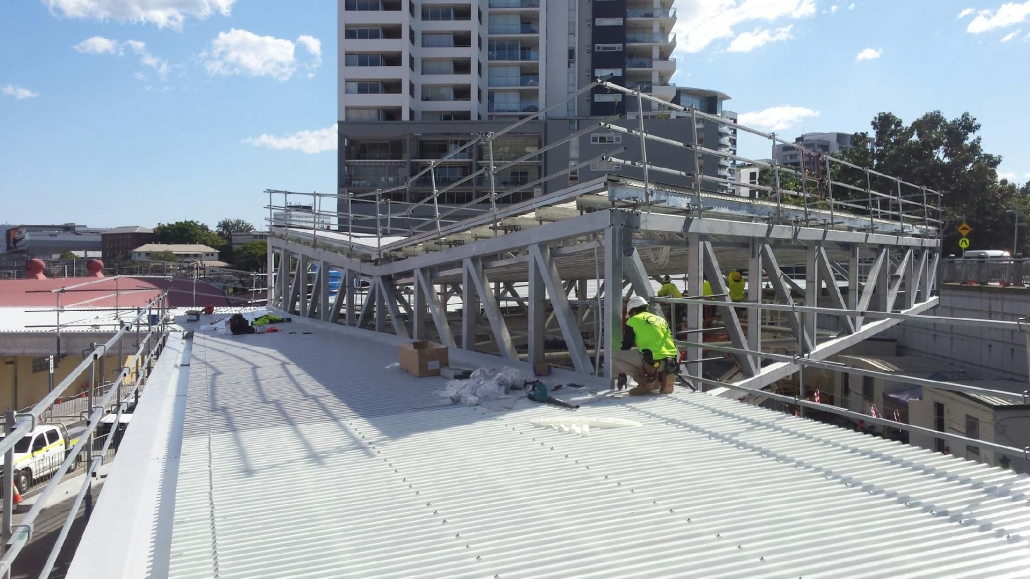
Roma Street Bus Interchange

This submission was provided by Keith Virtue of IDS, a ACMA member from Queensland. The project is the Roma Street Coach Terminal situated in the Brisbane CBD. The scope included 3D Cad modelling, project management & structural steel detailing. This project consisted of approx. 100 tonnes of architecturally “interesting” steelwork.
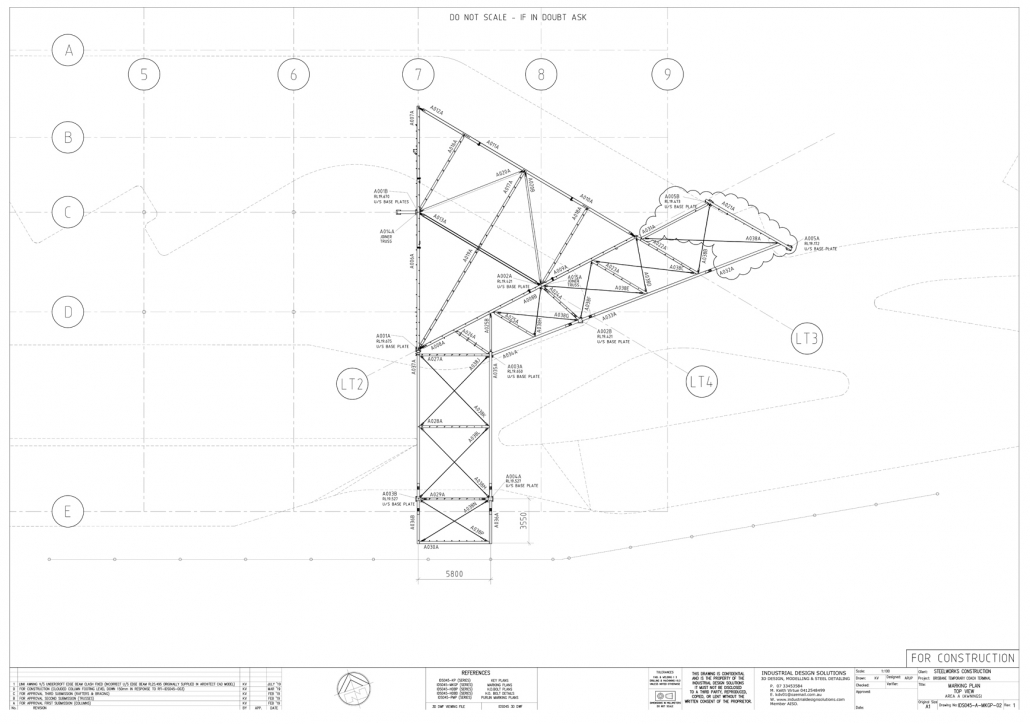
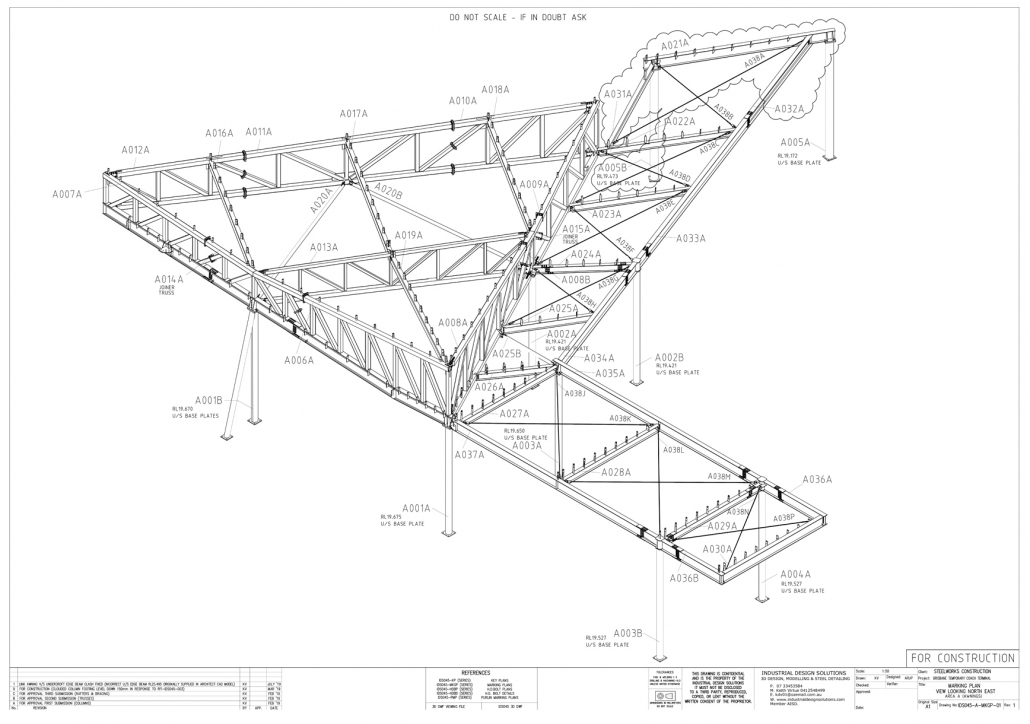
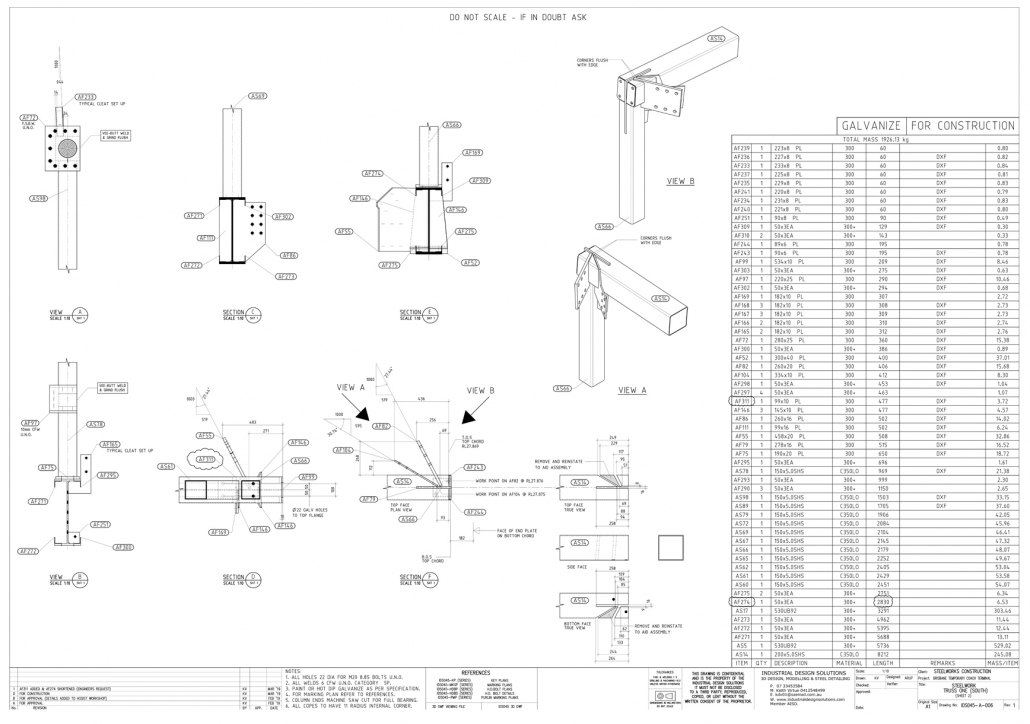
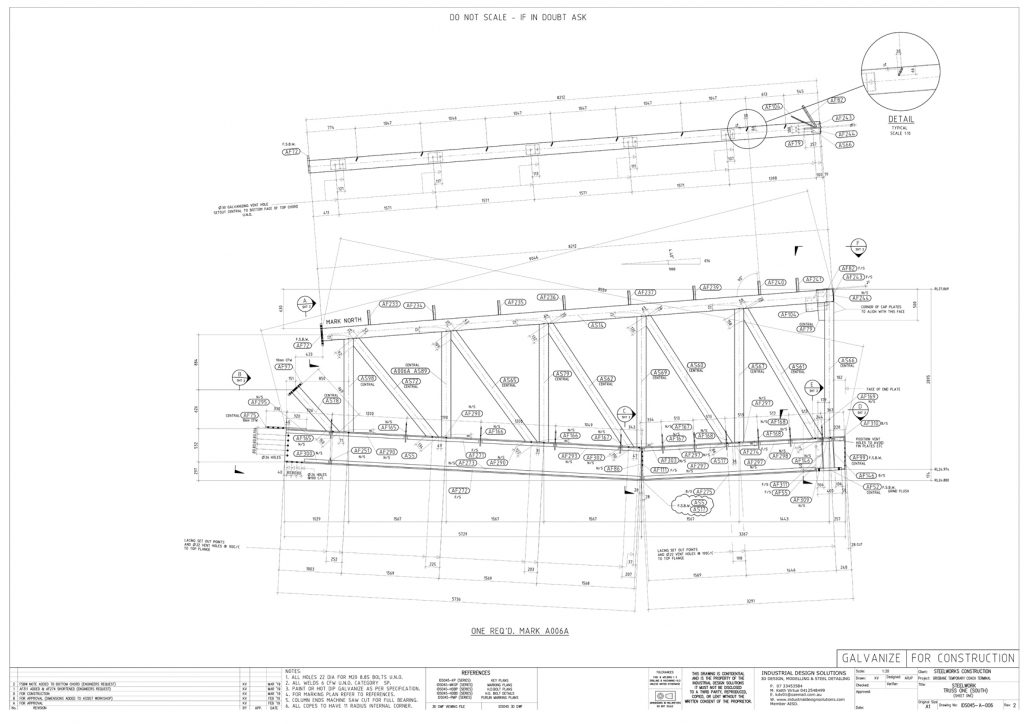
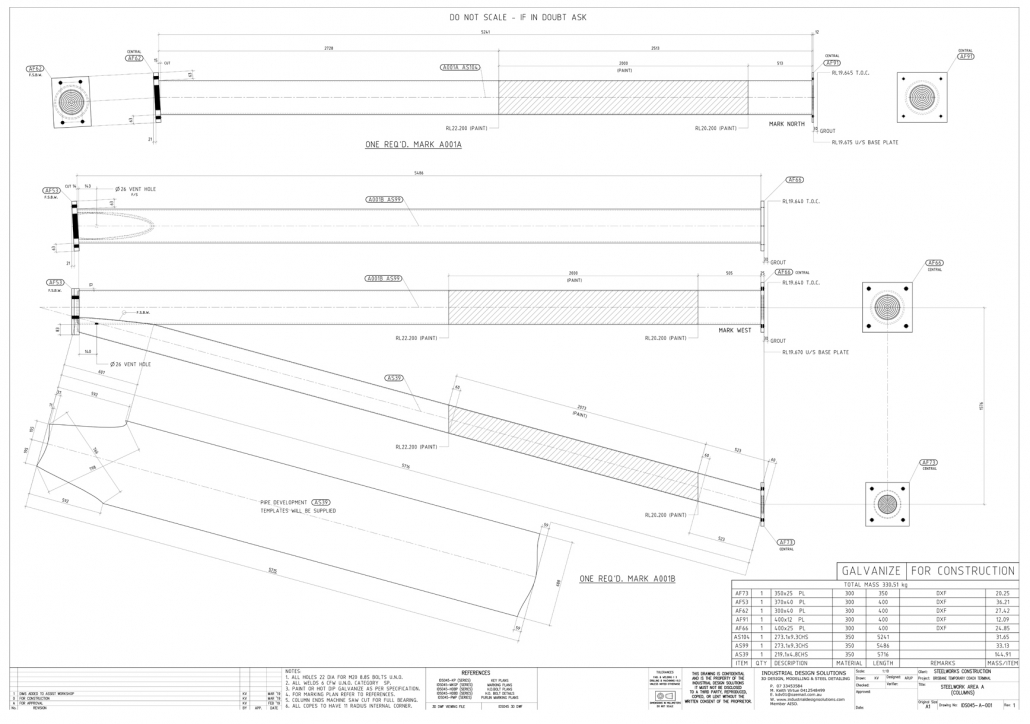
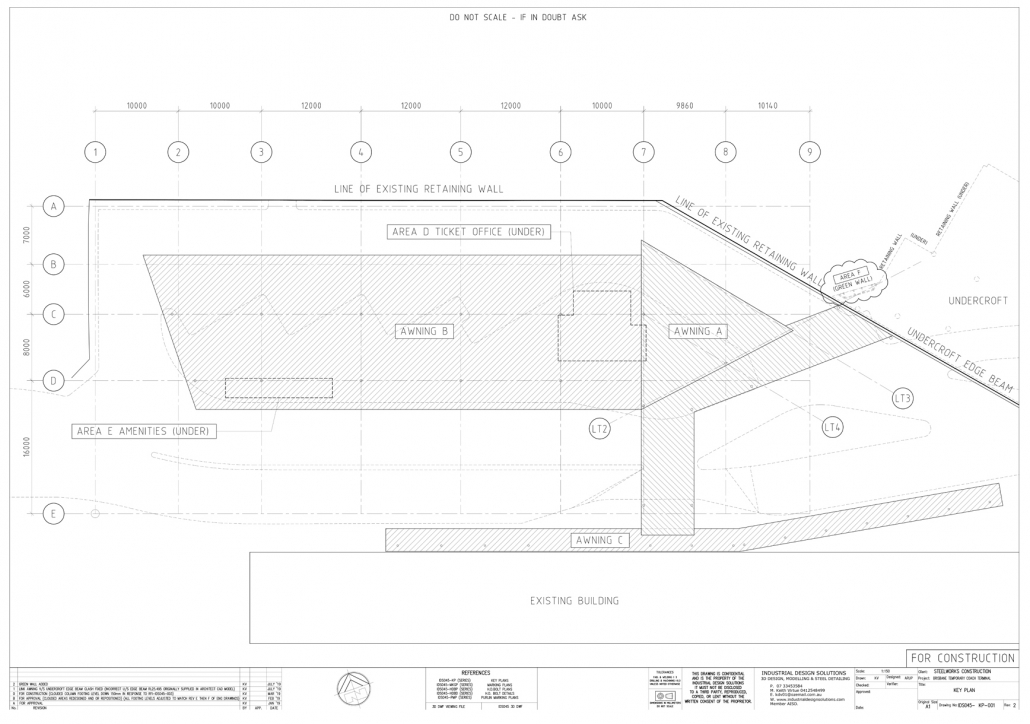
As it turned out, the drafting cost per tonne of steel almost doubled through the course of project delivery due to some significant “mission creep”. Keith has a long-standing relationship with the Brisbane-based fabricator client and performed his role in collaboration with 2 other drafters to get over the initial “hump”.
IDS is always looking for competent & practical collaborators (both ways) and is happy to use whatever software you are comfortable with, as long as the team can all share models in Autocad Solids & the drawing presentations are aesthetically & logically similar. Please see Keith’s website at www.industrialdesignsolutions.com for a bit more insight into his 30 year career as an industrial designer / structural / mechanical drafter.
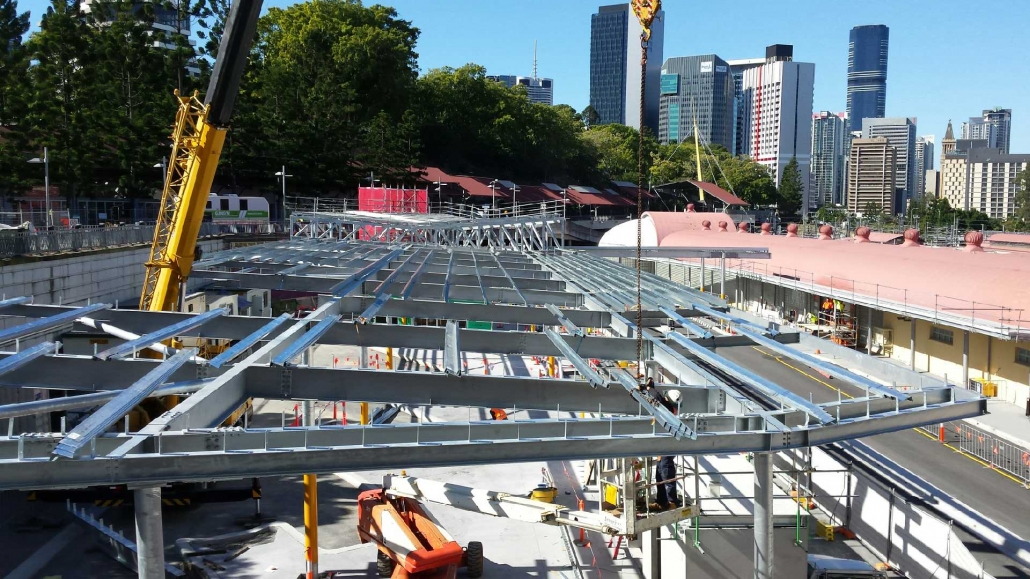
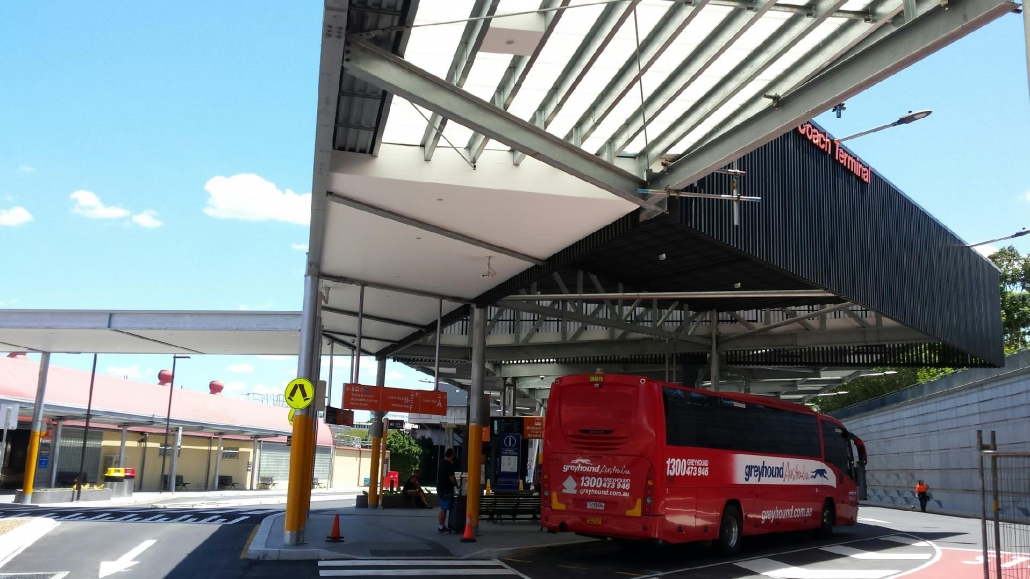
Roma Street Bus Interchange
Member postcard | Elmasry
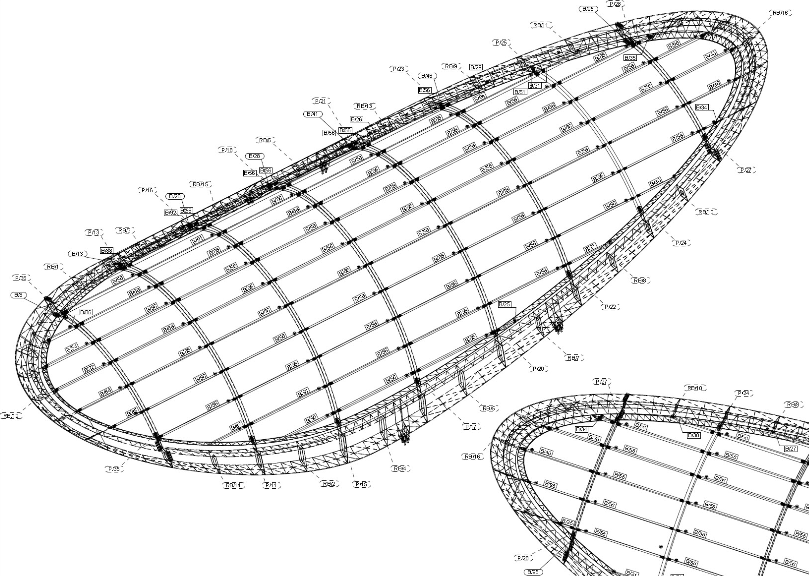
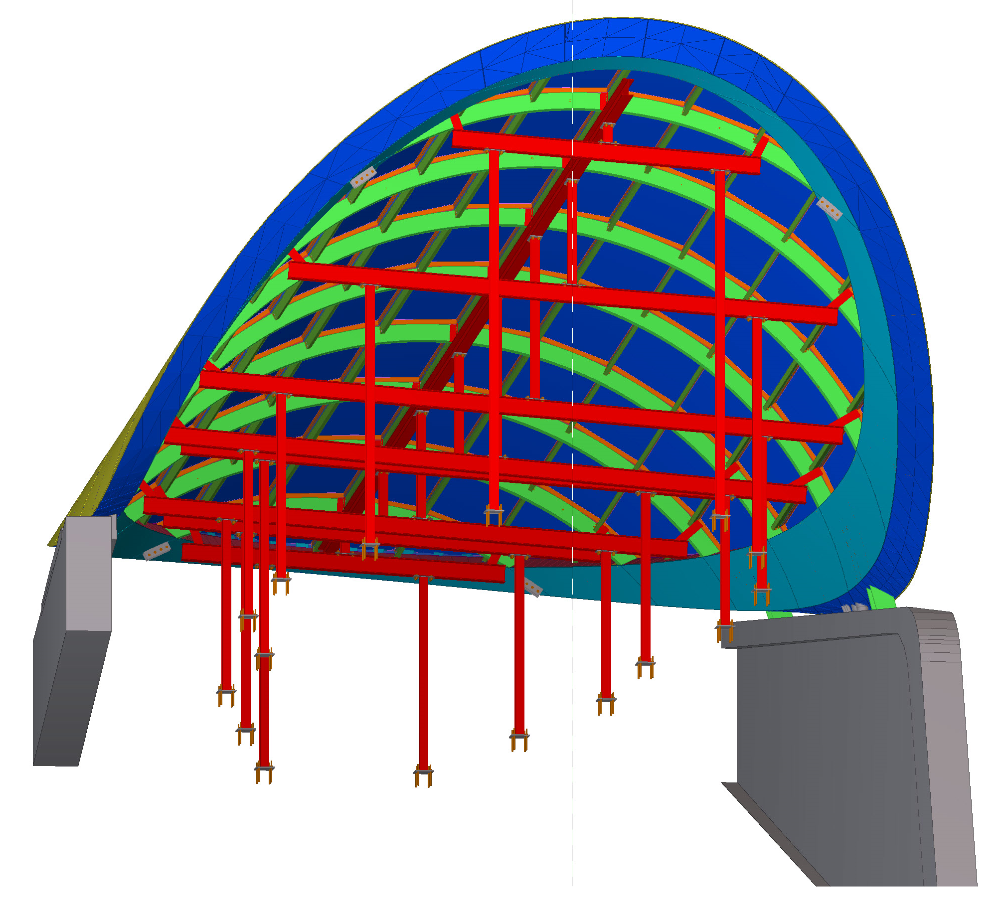
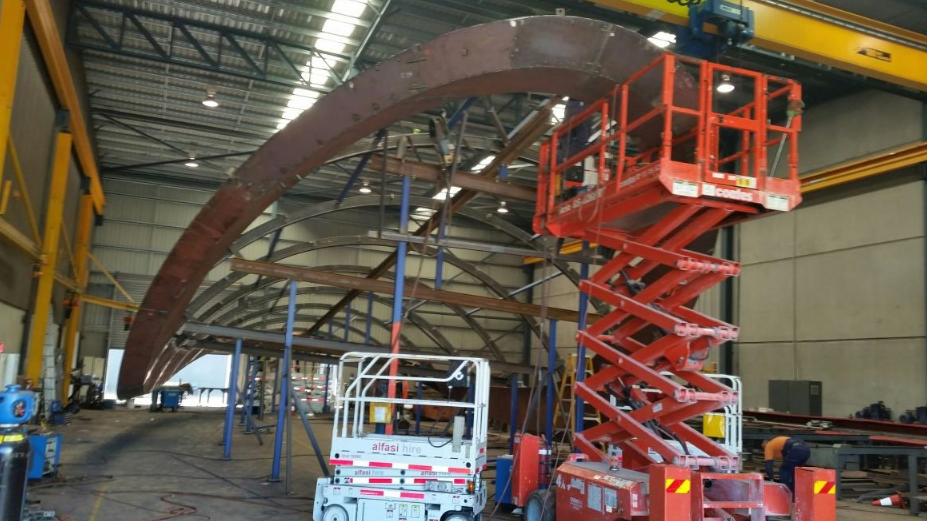
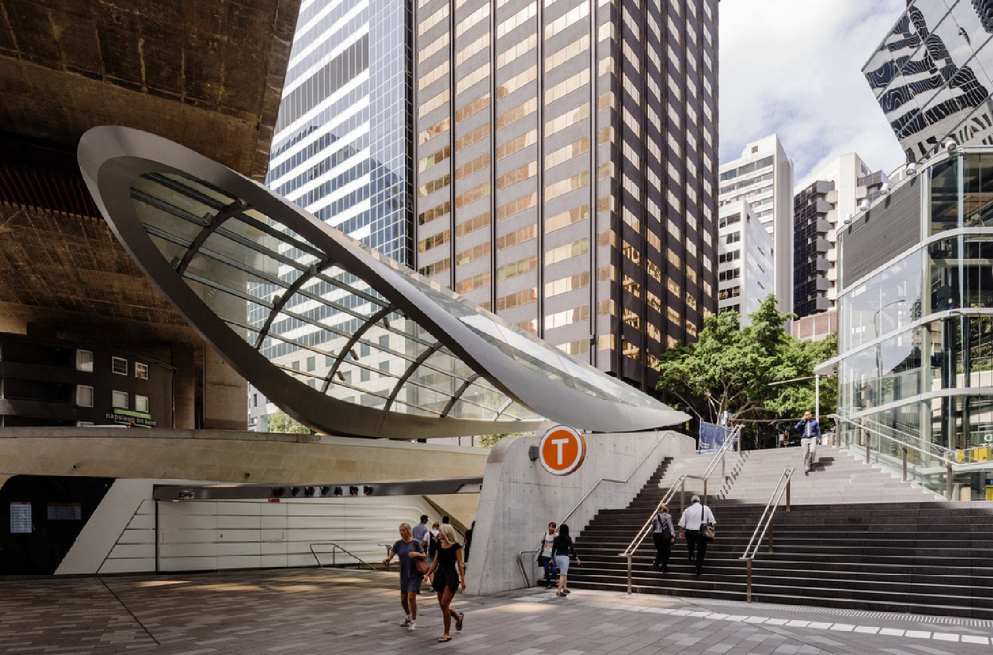
Project 1. Wynyard Walk Canopy
This project is a creative steel Structure canopy in the heart of Sydney city.
All the structure steel elements are exposed. Connection detail was designed to be invisible. The perimeter ring beam was made from fabricated boxed plates Curved in two directions.
A specially fabricated secondary structure was designed and fabricated to enable the assembly.
Project 2. Winsor road Railway Bridge – Northwest Rail Link -Towers
Designed to carry the metro train every four minutes in the peak when Sydney Metro, the Bridge is similar in design to Sydney’s Anzac Bridge – but the first cable-stayed railway bridge built on a curve in Australia.

The bridge’s two towers, with reach 45m above Windsor Rd, were installed in May 2017 then each filled with 336 tonnes of concrete. The bridge deck is supported by 127 steel cables.

The bridge is now a symbol of Sydney’s public transport future,
BrisBIM Cancellation
The BrisBIM has cancelled all gatherings for the near future and this affects the April event first up.
We have decided to entertain a digital delivery of the event, where all presenters record the presentation and it’s all compiled and delivered live – with the presenters being on hand to field questions.
If this goes ahead, it’s the first time this will happen at a BIM event in this country. We are confident we ca pull it off. We believe we could draw a very large crowd and it could extend nation wide + OS
Just because public gatherings are a no no, it doesn’t mean we have to dump things and as Clayton noted below, we can have a think about other options.
I’ll have a think myself anyway.
Australian Construction Modeller – Piping Overview
Author: Greg Newcomb, DBM Vircon
Over the past few years, there has been heavy focus within the Owner/Operator space to transition towards complete asset management throughout the project lifecycle. This is having a significant impact on not only how we price, manage and deliver scopes of work but also how we can streamline the design and detailing phases of the project to deliver a complete digital asset.
The benefits of this are numerous as clients are now seeing the advantages of 4, 5, 6 and 7D BIM practices throughout the project. This is providing a wealth of value during the construction, commissioning, operations and maintenance phases.

Historically within the piping discipline, it has been standard practice for the fabrication deliverables to be completed during the design phase. This typically will come in the form of a basic design isometrics which will then go through to the fabricator to cut and weld the individual spools before transportation. We are now however seeing the emergence of a requirement to add additional traceability and unique reporting to assist with asset management during procurement and fabrication.
This means the EPCM’s responsible for completing the design are now having to consider and add a additional information on the isometrics prior to releasing for fabrication, or engaging sub-contractors to add the additional traceability post completion of their basic design isometric. The emergence of these requirements is creating a new industry within itself similar to that of Structural Detailing.
Some of these requirements include unique item numbers for all piping components, unique weld and joint numbers, commodity and material codes, individualised spool drawings and unique reporting that can be consolidated and imported within their enterprise systems.

This is not only impacting the level of information required on the drawings but also the level of intellectual property and real-time data held within the models. As clients move towards complete asset management we are having to be more and more flexible to these requirements to meet their increasing demands.
Over the next 5 to 10 years we will most likely see a digital/operational twin requested more frequently as the final deliverable. Clients will continue to look for improved project collaboration, situational awareness and live on-site visibility to assist with the reduction of costs and schedule. It’s most likely we will see an ever-increasing demand for the level of detail typically provided within the detailing space requested during the design phase of a project. As this happens, designers and detailers expertise will need to expand to cover both skills sets as what previously might have been two jobs will now transition into one.
Vendor Modelling and Metadata
Author: Alina Tarshina, DBM Vircon
When I started working at DBMVircon a year ago as a trainee, I was assigned to a vendor modelling and metadata team on the South Flank Project. This is going to be the biggest iron ore processing facility ever built in Western Australia, including an 80 million tonnes per year crushing and screening plant, an overland conveyor system and rail-loading facilities.
On South Flank, we were required to provide precise vendor Navisworks models including accurate metadata specifications and quantities (Figure 1). The benefits of accuracy are the elimination of clashes in construction, less rework, minimisation of waste and developing an inventory for operations and maintenance.

Figure 1 – Metadata of a Gearbox Cooler
South Flank was a design-assist project; therefore, it was not always easy to get access to specific and accurate vendor information. For example, we were provided with some generic past project drawings for the surge conveyor gravity take up which was then modelled as best as possible. Later, when more precise festoon, sheave, shackles and rope information was supplied, I re-modelled the corresponding objects and appended the correct data to them.
There were also cases when a detailed design of a vendor block was not available and I was required to model simplified placeholders. For instance, initially I modelled all idlers from revision A drawings which helped structural modellers to use them in their models. After receiving Approved For Construction drawings I was able to update related idler models.
Another challenge we overcame about half way into the project was revision control of vendor models. We had to ensure vendor models accurately matched their latest revision drawings. We introduced a new system, assigning revisions to 3D models which helped us to identify what vendor blocks have or have not been updated to reflect their latest revision drawings.
We were also able to successfully provide additional asset management IRCP (Internal Registration of Classified Plant) models and data. It will be a significant benefit to see not only the location of all the IRCP plaques in a project’s 3D model but also the number of the engineering documents it is linked to (Figure 2).

Figure 2 – IRCP metadata of a beam
In my opinion, the most challenging part of IRCP management was to develop a new algorithm to be able to show the IRCP plaques with all required data in them in Tekla models without affecting existing IFC drawings. I’m very glad I had an opportunity to participate in the testing of such an interesting development.
I find being a trainee very enjoyable. I keep learning new things every day. DBM Vircon gives its trainees opportunities to try different aspects of drafting. Over the past year, I have been exposed to both structural and piping disciplines and have undertaken 3D modelling, 2D drafting and vendor data modelling.
Being a trainee and also a woman in the construction industry I am encouraged to know that I always get a chance to express my opinion, suggest my ideas and get all the support I need to learn and develop my skills. It’s good that engineering companies have started hiring more females. Women bring their own perspective on everything including solving problems, creativity and leadership.
As a result of the knowledge I gained during my first year of traineeship, I believe my future career pathway has opened up and I’m looking forward to participating in many more interesting projects.
Steel Detailers Manual updated!
Steel Detailers Manual updated!
The much anticipated and long awaited second edition of the ASI ‘Australian Steel Detailers’ Handbook’ is now available in both hard copy and our new digital format.
Much has changed since the publication of the first edition of the Australian Steel Detailers Handbook, in particular the technology used for detailing, powerful 3D modelling and the increasing importance of and engagement that steel detailers have with the supply chain. This is of importance to the early stage stakeholders in a project, who look to the functionality provided by the enhanced 3D models to develop value-engineered solutions. 
The second edition reflects these changes and, in particular, has introduced new or enhanced material addressing:
- Project organisation, reflecting the evolving contractual relationships and implementation of ‘integrated project delivery’ (IPD)
- The transition of the traditional ‘steel detailer’ function to be more aptly described as ‘construction modeller’, reflecting the importance of the 3D modelling function and the 3D model becoming the ‘single source of information’.
- Improved information regarding the steelmaking process, steel properties and steel products. With increasing overseas supply and challenges as regards compliance of construction products, it is important that steel detailers are informed and exercise duty of care in ensuring clear documentation is produced.
- Updated information on CAD equipment consistent with the powerful 3D modelling software available.
- Updated references to current Standards and construction practice for products, including steel sections, bolts and bolting, welds and welding.
- Updated information on standardised structural connections, including 3D views.
- An entirely new section providing details of a fully detailed 3D building, incorporating examples of many of the standardised connections. Most significantly, access to the full industry foundation class (IFC) based model of the building is included, allowing users to import this IFC model into their own software and further explore the details. Included with the model are numerous examples of typical deliverables, including marking plans, assembly DWGs, fitting sheets, material take-off and bolt lists.

3D Model Provided in IFC Format
The format of the hard-copy has been changed from the previous edition. It is now hardbound rather than the previous folder structure, and the printed drawings in the previous version have been replaced by the digital IFC model and deliverables.
The electronic files, comprising the 3D model in IFC format and the deliverables, are available to registered purchasers of the publication and may be downloaded from the ASI website once you have purchased the book. The link for these Supplementary Resources may be found in Chapter 17 ‘Example 3D model and deliverables’.
The book may be purchased from the ASI website here: https://www.steel.org.au/resources/bookshop/products/australian-steel-detailers-handbook/
This publication has also been launched as an eBook. ASI is offering a special 10% discount to ACMA members on the hard-copy, eBook or the hard copy/eBook bundle. ACMA members will be able to obtain the discount code by emailing bookshop@steel.org.au
Please note: ASI eBooks are not PDFs. They are accessed via an eReader when online. It is not possible to download or print them.
Also of interest to detailers is another new edition – Standardised Structural Connections has been released after many years out of print. Whereas the Structural Steel Connection Series released in 2007 (simple connections for open sections), 2009 (rigid connections for open sections) and 2013 (tubular connections) aims at practising structural engineers, this publication has been revised and refreshed to provide a concise reference to good practice and standardisation in connection configuration, applicable to a number of other stakeholders such as steel detailers, engineering students and suppliers of components associated with steel connections. This is available from the ASI Bookshop in hard-copy and eBook format at https://www.steel.org.au/resources/bookshop/
BIM in Government
BIM in Government
Finally, the QLD State Government and the Department of State Development, Manufacturing, Infrastructure and Planning have developed a BIM implementation plan. Following on from consultation with Industry and BIM representative bodies such as BrisBIM, for feedback on a range of areas the plan was to cover, a document has been drafted and is in the public domain.
https://www.statedevelopment.qld.gov.au/infrastructure/building-information-modelling-bim.html
“All major government construction projects with an estimated capital cost of $50 million or more, which commence a detailed business case from 1 July 2019, will be required to use Building Information Modelling in accordance with the principles.”
It’s about time!
Added to this (and one of the benefits of attending BrisBIM events), one of the speakers at the June event was Brian McSweeny, the BIM Implementation Manager for TMR (Transport and Main Roads). Brian outlined the vision TMR have for implementing BIM in their organisation and was open about the complexity of introducing such drastic changes in large organisations.
https://www.linkedin.com/in/bryan-mcsweeney-1021073b/?originalSubdomain=au
As Steel Detailers it’s difficult for many of us to understand why it takes so long for organisations and government to keep up with progress because we were the early adopters of BIM, because the manufacturing sector of construction has been digitized for decades. It’s probably not such a bad thing that it’s taken so long, as much of the AEC industry is now practicing BIM and it’s likely no one in the industry who doesn’t know what an IFC file is these days! If government and the likes of TMR take up BIM now, they have a far better chance of getting it right and making their project requirements fit for purpose as the foundations for BIM in industry have already been set by the likes of Construction Modellers.
Linked In Articles Of Interest
Linkedin Articles of interest
- Steel Detailing and concrete forms
https://www.linkedin.com/feed/update/urn:li:activity:6546384319701757952/ - Laser scanning
https://www.linkedin.com/pulse/laser-scan-surveys-steel-fabrication-ian-brightman/
- Scanning and construction
https://www.youtube.com/watch?v=Sm8XBZ7l6hg&t=161s
- Steel Fabrication and Construction Network
https://www.linkedin.com/groups/13617350/ - Multi story surveying
https://www.linkedin.com/pulse/multi-storey-high-rise-spire-surveying-philip-shanks/